Quartzite vs. Quartz Countertops: What’s the Difference?
Quartz and quartzite may sound similar, but they are two very different countertop materials.
That distinction is important when choosing surfaces for a kitchen, bathroom, outdoor living space, or luxury residential remodel. While both materials are known for their beauty and durability, they differ in how they are created, how they handle heat and sunlight, how much maintenance they require, and the type of appearance they provide.
For Idaho homeowners comparing quartzite vs. quartz countertops, understanding these differences can make selecting the right material much easier.
At Snake River Stone, we work with quartz, quartzite, granite, marble, and other premium stone surfaces. Here is what homeowners should know before deciding between quartzite and quartz.
What Is Quartzite?
Quartzite is a natural stone formed through geological processes involving sandstone, heat, and pressure.
The result is an exceptionally hard natural material with unique colors, patterns, veining, and movement.
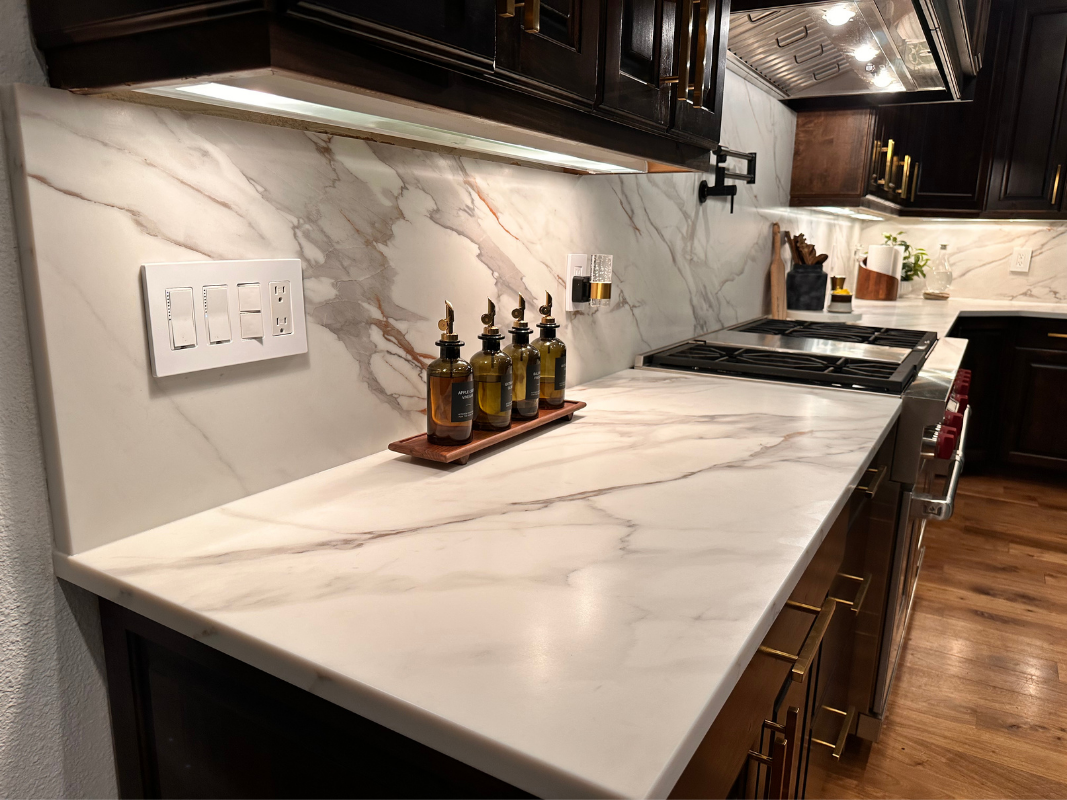
Because quartzite is quarried from the earth, every slab is different. Some varieties have soft, understated movement, while others feature dramatic veining that can turn a countertop, island, or architectural feature into the centerpiece of the room.
Quartzite is especially appealing to homeowners who want authentic natural stone combined with excellent durability.
What Is Quartz?
Quartz countertops are engineered rather than quarried as complete natural slabs.
They are manufactured using quartz minerals combined with other materials to produce a strong, nonporous countertop surface.
The manufacturing process allows for a wide range of colors and patterns. Some quartz products provide clean, consistent designs, while others are created to resemble marble and other natural stones.
For homeowners who want predictable color, low maintenance, and extensive design choices, quartz can be an excellent solution.
Quartzite vs. Quartz Countertops: Appearance
Appearance is one of the biggest reasons homeowners choose one material over the other.
Quartzite Offers Natural Variation
Every quartzite slab is unique.
Its natural veining, mineral characteristics, and color variation cannot be perfectly reproduced. This makes quartzite particularly attractive for luxury kitchens where the stone itself is intended to become a design feature.
Selecting a quartzite slab can be similar to selecting a piece of natural artwork.
When dramatic movement is present, thoughtful fabrication becomes especially important. The positioning of veins across seams, islands, backsplashes, and waterfall panels can significantly affect the finished result.
Quartz Offers Greater Consistency
Quartz provides more control over the final appearance.
Because it is manufactured, colors and patterns tend to be more predictable. This can make it easier to coordinate countertops with cabinetry, flooring, paint colors, and other finishes.
Quartz is also available in designs that mimic the appearance of natural marble without requiring the same level of maintenance associated with genuine marble.
Which Is More Durable: Quartzite or Quartz?
Both materials are highly durable, but they perform differently.
Quartzite is an extremely hard natural stone and is well suited for demanding residential applications. With proper care and professional fabrication, it can provide a long-lasting countertop surface.
Quartz is also strong and resistant to many types of everyday wear. Its engineered construction makes it a popular choice for busy kitchens and bathrooms.
However, durability should not be confused with being damage-proof.
Regardless of the material, cutting boards should be used rather than cutting directly on the countertop. Good everyday habits help protect both the surface and your kitchen tools.
Which Is More Heat Resistant?
Quartzite has the advantage when it comes to heat resistance.
As a natural stone, quartzite generally handles heat better than engineered quartz.
Quartz countertops contain manufactured components that can be damaged by excessive heat. Hot cookware should never be placed directly on a quartz surface. Using trivets and hot pads is an easy way to prevent unnecessary damage.
Even with heat-resistant natural stone, protective practices are still recommended. A beautiful countertop is an investment, and there is little reason to expose it to avoidable thermal stress.
Which Countertop Requires More Maintenance?
Quartz typically requires less routine maintenance.
Because quartz is nonporous, it does not require the periodic sealing commonly associated with natural stone.
Quartzite is a natural material and generally needs to be properly sealed. Some slabs may require more frequent sealing than others depending on the characteristics of the specific stone.
For homeowners who prioritize minimal maintenance, quartz has a clear advantage.
For homeowners who value authentic natural stone and are comfortable with periodic sealing, quartzite remains an excellent choice.
Can Quartzite and Quartz Be Used Outdoors?
This is another significant difference between the two materials.
Quartzite is naturally UV resistant, making it an attractive material to consider for outdoor kitchens and entertainment spaces.
Engineered quartz is generally intended for indoor applications. Prolonged exposure to UV light can potentially affect its appearance, depending on the product.
For Idaho homeowners creating outdoor kitchens, bars, or entertainment areas, material selection should account for sunlight, temperature changes, moisture, and the specific installation environment.
A countertop that performs beautifully inside the home is not automatically the best option outside.
Which Material Is Better for a Waterfall Island?
Both quartz and quartzite can create impressive waterfall kitchen islands.
The choice depends largely on the desired aesthetic.
Quartz can produce a clean and controlled appearance. Its pattern consistency works particularly well in modern kitchens where homeowners want strong lines and predictable visual flow.
Quartzite can create something much more organic and dramatic.
With the right slab, natural veining can flow across the top of an island and continue down the waterfall panel. Achieving that effect requires careful planning and precision fabrication, especially when the stone contains pronounced movement.
For luxury projects, slab layout can be just as important as slab selection.
Which Is Better for Kitchen Countertops?
There is no universal winner.
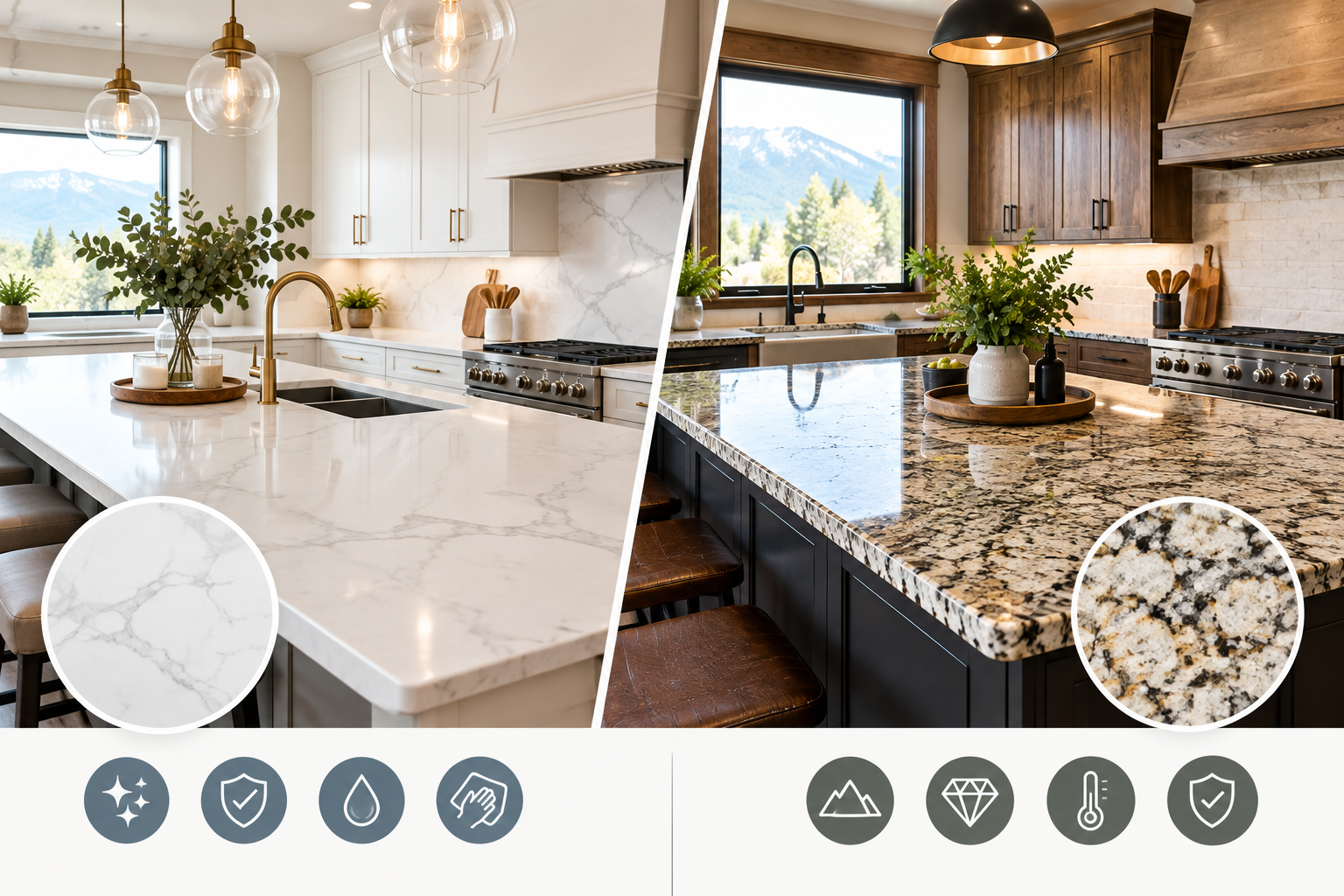
Choose quartz countertops if you prioritize:
- Low maintenance
- A nonporous surface
- Consistent colors and patterns
- Extensive design options
- An indoor kitchen application
Choose quartzite countertops if you prioritize:
- Genuine natural stone
- Unique veining and movement
- Excellent hardness
- Greater heat resistance
- UV resistance
- Indoor and potential outdoor applications
Your lifestyle and design goals should ultimately determine which advantages matter most.
Frequently Asked Questions About Quartzite vs. Quartz
Is quartzite the same as quartz?
No. Quartzite is a naturally formed stone quarried from the earth. Quartz countertops are engineered surfaces manufactured using quartz minerals and other materials.
Does quartzite need to be sealed?
Yes, quartzite generally benefits from proper sealing. Sealing helps protect natural stone against absorption and staining.
Does quartz need to be sealed?
Engineered quartz is nonporous and typically does not require routine sealing.
Is quartzite heat resistant?
Quartzite offers excellent natural heat resistance. However, using trivets or hot pads is still a smart way to protect any premium countertop.
Can quartz countertops be installed outside?
Quartz is generally designed for indoor use. UV exposure can affect certain engineered quartz products, making natural stone options such as quartzite more appropriate for many outdoor applications.
Is quartzite good for luxury kitchens?
Yes. Its natural beauty, durability, and one-of-a-kind movement make quartzite an excellent choice for luxury kitchens, statement islands, and other high-end residential applications.
Find the Right Stone for Your Idaho Home
Choosing between quartzite and quartz should not come down to which material is simply considered “better.”
It should come down to which material is better for your project.
Snake River Stone helps Idaho homeowners evaluate countertop materials based on appearance, durability, maintenance, location, and the overall design of the space.
Established in 2001 with craftsmanship roots dating back to 1978, we bring decades of experience to custom kitchens, bathrooms, outdoor entertainment spaces, fireplaces, waterfall islands, and specialty architectural stonework.
Whether you prefer the natural character of quartzite or the consistency and easy maintenance of quartz, expert fabrication and installation can make all the difference in the finished result.
Your Vision, Our Craftsmanship.
Call Snake River Stone at (208) 985-4407 to discuss your project and explore quartz, quartzite, granite, marble, and other premium countertop options for your Idaho home.
Recent Posts